Anna G·February 3, 2026·6m
How On-Chain Execution Changes Fixed-Income Instruments
Anna G · February 3, 2026 · 6m
How On-Chain Execution Changes Fixed-Income Instruments
Fixed-income instruments are built on trust. Investors commit capital for defined periods with the expectation that terms will be honoured and payments delivered as agreed. In traditional markets, that trust is supported by intermediaries, legal frameworks, and administrative processes that sit largely out of view.
In digital asset markets, a different execution model is emerging. On-chain infrastructure allows key elements of fixed-income instruments to be recorded, enforced, and settled directly on a blockchain. This does not change the economic purpose of fixed income, but it does change how the mechanics operate.
Understanding that distinction is essential as fixed-income thinking becomes more relevant in crypto markets.
From Off-Chain Processes to On-Chain Execution
Conventional fixed-income instruments rely on a chain of intermediaries. Ownership records, payment schedules, and redemptions are managed through custodians, registrars, and back-office systems. Settlement can take days. Reporting is periodic rather than continuous.
On-chain execution replaces many of these processes with programmable infrastructure. Smart contracts can encode the terms of an instrument and execute them automatically. Ownership can be tracked in real time. Payments can be distributed according to a predefined schedule without manual intervention.
This shift does not remove financial risk, but it alters how execution risk is managed.
The relevance of this transition becomes clearer when viewed alongside the broader discussion of fixed income in crypto.
What On-Chain Execution Actually Covers
On-chain execution is often discussed as a single feature, but it encompasses several distinct functions within a fixed-income instrument.
These typically include:
- Recording ownership and transfers
- Enforcing payment schedules
- Executing redemptions at maturity or upon early termination
- Maintaining an immutable transaction history
By handling these elements programmatically, on-chain systems reduce reliance on manual reconciliation and third-party verification. Investors are able to observe execution directly rather than relying solely on reports.
Transparency as a Structural Feature
One of the most significant changes introduced by on-chain execution is transparency. In traditional fixed-income markets, visibility into instrument mechanics is often limited to periodic disclosures. Day-to-day activity is rarely observable by investors.
On-chain execution changes that dynamic. Payment events, outstanding balances, and ownership records can be verified independently. This does not guarantee performance, but it does clarify process.
For fixed-income structures, where predictability and trust are central, that visibility can materially affect investor confidence.
How On-Chain Execution Supports Fixed-Income Thinking
Fixed income prioritises defined outcomes. Capital is committed under known terms. Returns are agreed in advance. Execution must be reliable for those assumptions to hold.
On-chain infrastructure supports this by reducing ambiguity around enforcement. Smart contracts do not reinterpret terms. They execute them. This aligns closely with the reasons why fixed-income thinking is returning to crypto markets.
why fixed-income thinking is returning to crypto markets
The result is not higher returns, but clearer expectations.
The Relationship With Digital Asset Treasuries
Digital asset treasuries rely on structure and oversight rather than constant optimisation. On-chain execution fits naturally within this framework.
By encoding treasury instruments on-chain, treasuries can:
- Maintain a live register of noteholders
- Automate income distribution
- Support controlled secondary transfers
- Reduce administrative overhead
These features reinforce the core principles discussed in what is a digital asset treasury.
what is a digital asset treasury
Execution becomes part of the treasury strategy rather than an external dependency.
Fixed Income Versus Yield in an On-Chain Context
Both yield-based and fixed-income structures can use on-chain infrastructure, but the implications differ.
Yield strategies use on-chain execution to facilitate participation and reward distribution. Returns remain variable and responsive to market conditions.
Fixed-income instruments use on-chain execution to enforce terms and schedules. The emphasis is not on flexibility, but on reliability.
This distinction reinforces the broader comparison outlined in crypto yield versus fixed income.
crypto yield versus fixed income
Understanding how execution aligns with structure helps clarify which model an instrument is designed to support.
Risk Does Not Disappear, It Becomes Clearer
It is important not to overstate the benefits of on-chain execution. Financial risk remains. Market conditions can change. Treasury decisions still matter.
What on-chain execution changes is the visibility of process. Investors can see how an instrument is meant to function and how it is being executed. That clarity allows risk to be assessed more accurately.
For fixed-income instruments, where outcomes depend on disciplined execution, this distinction is meaningful.
An Evolution in How Fixed Income Is Delivered
On-chain execution does not reinvent fixed income. It modernises how it is delivered within digital asset markets.
As crypto continues to intersect with traditional financial concepts, infrastructure that supports transparency, automation, and verifiability becomes increasingly important. On-chain execution offers one way to align fixed-income mechanics with the expectations of a digital market.
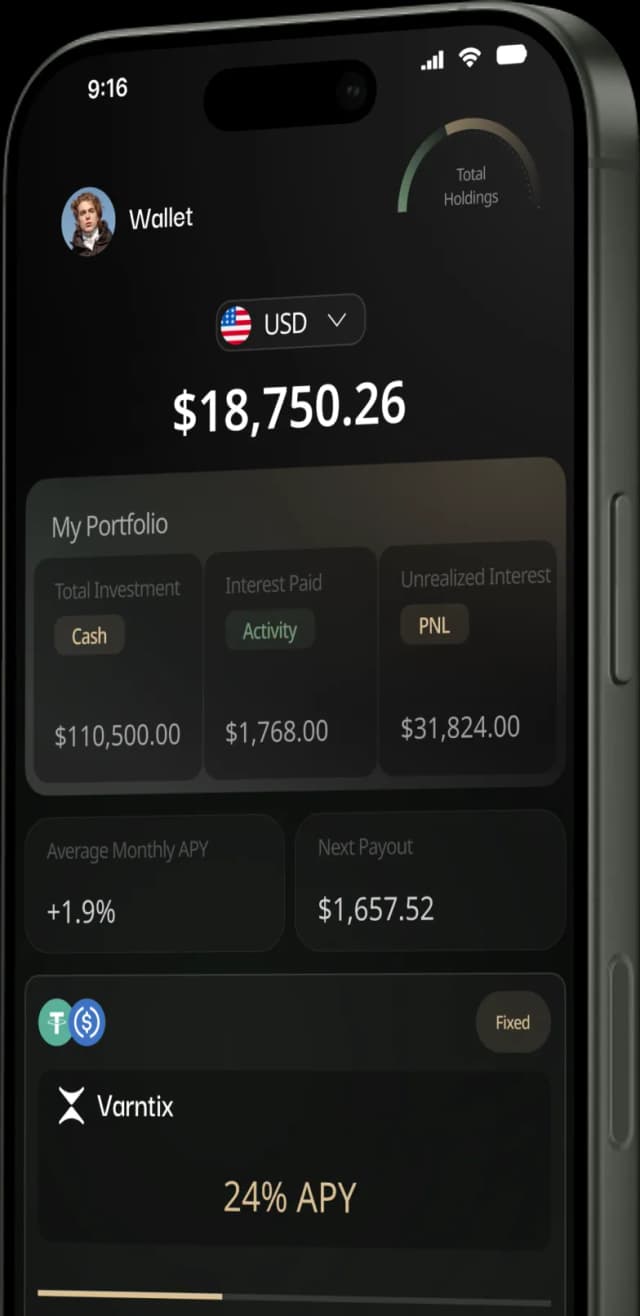
Platforms such as Varntix illustrate how fixed-income instruments can be structured and executed on-chain while retaining the core principles that define the asset class.
Looking Ahead
The adoption of on-chain execution reflects a broader trend toward structure and accountability in crypto markets. As fixed-income thinking gains relevance, the mechanisms used to deliver it will continue to evolve.
On-chain infrastructure is not a solution to every challenge, but it represents a meaningful step toward making fixed-income instruments more transparent and operationally efficient in a digital context.
How On-Chain Execution Changes Fixed-Income Instruments
How On-Chain Execution Changes Fixed-Income Instruments
Fixed-income instruments are built on trust. Investors commit capital for defined periods with the expectation that terms will be honoured and payments delivered as agreed. In traditional markets, that trust is supported by intermediaries, legal frameworks, and administrative processes that sit largely out of view.
In digital asset markets, a different execution model is emerging. On-chain infrastructure allows key elements of fixed-income instruments to be recorded, enforced, and settled directly on a blockchain. This does not change the economic purpose of fixed income, but it does change how the mechanics operate.
Understanding that distinction is essential as fixed-income thinking becomes more relevant in crypto markets.
From Off-Chain Processes to On-Chain Execution
Conventional fixed-income instruments rely on a chain of intermediaries. Ownership records, payment schedules, and redemptions are managed through custodians, registrars, and back-office systems. Settlement can take days. Reporting is periodic rather than continuous.
On-chain execution replaces many of these processes with programmable infrastructure. Smart contracts can encode the terms of an instrument and execute them automatically. Ownership can be tracked in real time. Payments can be distributed according to a predefined schedule without manual intervention.
This shift does not remove financial risk, but it alters how execution risk is managed.
The relevance of this transition becomes clearer when viewed alongside the broader discussion of fixed income in crypto.
What On-Chain Execution Actually Covers
On-chain execution is often discussed as a single feature, but it encompasses several distinct functions within a fixed-income instrument.
These typically include:
- Recording ownership and transfers
- Enforcing payment schedules
- Executing redemptions at maturity or upon early termination
- Maintaining an immutable transaction history
By handling these elements programmatically, on-chain systems reduce reliance on manual reconciliation and third-party verification. Investors are able to observe execution directly rather than relying solely on reports.
Transparency as a Structural Feature
One of the most significant changes introduced by on-chain execution is transparency. In traditional fixed-income markets, visibility into instrument mechanics is often limited to periodic disclosures. Day-to-day activity is rarely observable by investors.
On-chain execution changes that dynamic. Payment events, outstanding balances, and ownership records can be verified independently. This does not guarantee performance, but it does clarify process.
For fixed-income structures, where predictability and trust are central, that visibility can materially affect investor confidence.
How On-Chain Execution Supports Fixed-Income Thinking
Fixed income prioritises defined outcomes. Capital is committed under known terms. Returns are agreed in advance. Execution must be reliable for those assumptions to hold.
On-chain infrastructure supports this by reducing ambiguity around enforcement. Smart contracts do not reinterpret terms. They execute them. This aligns closely with the reasons why fixed-income thinking is returning to crypto markets.
why fixed-income thinking is returning to crypto markets
The result is not higher returns, but clearer expectations.
The Relationship With Digital Asset Treasuries
Digital asset treasuries rely on structure and oversight rather than constant optimisation. On-chain execution fits naturally within this framework.
By encoding treasury instruments on-chain, treasuries can:
- Maintain a live register of noteholders
- Automate income distribution
- Support controlled secondary transfers
- Reduce administrative overhead
These features reinforce the core principles discussed in what is a digital asset treasury.
what is a digital asset treasury
Execution becomes part of the treasury strategy rather than an external dependency.
Fixed Income Versus Yield in an On-Chain Context
Both yield-based and fixed-income structures can use on-chain infrastructure, but the implications differ.
Yield strategies use on-chain execution to facilitate participation and reward distribution. Returns remain variable and responsive to market conditions.
Fixed-income instruments use on-chain execution to enforce terms and schedules. The emphasis is not on flexibility, but on reliability.
This distinction reinforces the broader comparison outlined in crypto yield versus fixed income.
crypto yield versus fixed income
Understanding how execution aligns with structure helps clarify which model an instrument is designed to support.
Risk Does Not Disappear, It Becomes Clearer
It is important not to overstate the benefits of on-chain execution. Financial risk remains. Market conditions can change. Treasury decisions still matter.
What on-chain execution changes is the visibility of process. Investors can see how an instrument is meant to function and how it is being executed. That clarity allows risk to be assessed more accurately.
For fixed-income instruments, where outcomes depend on disciplined execution, this distinction is meaningful.
An Evolution in How Fixed Income Is Delivered
On-chain execution does not reinvent fixed income. It modernises how it is delivered within digital asset markets.
As crypto continues to intersect with traditional financial concepts, infrastructure that supports transparency, automation, and verifiability becomes increasingly important. On-chain execution offers one way to align fixed-income mechanics with the expectations of a digital market.
Platforms such as Varntix illustrate how fixed-income instruments can be structured and executed on-chain while retaining the core principles that define the asset class.
Looking Ahead
The adoption of on-chain execution reflects a broader trend toward structure and accountability in crypto markets. As fixed-income thinking gains relevance, the mechanisms used to deliver it will continue to evolve.
On-chain infrastructure is not a solution to every challenge, but it represents a meaningful step toward making fixed-income instruments more transparent and operationally efficient in a digital context.
Similar Articles

Anna G · February 3, 2026 · 10m
Fixed Income in Crypto:
How Digital Asset Treasuries Are Shaping Investment Strategies

Anna G · February 3, 2026 · 6m
Why Fixed-Income Thinking Is Returning to Crypto Markets

Anna G · February 3, 2026 · 6m
Digital Asset Treasuries and the Rise of Fixed Income in Crypto

Anna G · February 3, 2026 · 6m